
BLADDER & BOWEL ISSUES

Benefits of Pelvic Floor Therapy
Stop Embarrassing Bladder Leaks: no longer having to worry about leaks with cough, jump, laugh, and running.
Easier Bowel Movements: Often we find the pelvic floor is tight from chronic constipation, and we can help release it.
No Longer “Peeing Just In Case”: Finally at ease not having to plan every bathroom break when you leave the house.
Controlled Urges: Our goal is to make sure your bladder and bowel habits are great and not in control of you!
Common Conditions Treated
Urinary Incontinence or Bladder Leakage
Urinary Urgency or Frequency
Urinary Retention or Difficulty Relaxing to Urinate
Constipation
Bowel Incontinence or Leakage
Bowel Issues Related to Fissures or Hemorrhoids
Increased Leakage during Perimenopause or Menopause
Pain or Cramping from Endometriosis or SIBO
Post Bladder or Bowel Cancer Surgery
Postpartum Healing with Bladder and Bowel Issues
One of the most common, but definitely not normal, problems we treat is bladder leakage, also known as urinary incontinence. It’s a super frustrating problem to have, and many women can experience leaking even if they didn’t have a baby. Some people leak when they cough, sneeze, laugh, or jump, and this is called stress incontinence. Other times, the leaking occurs when you hear running water, or you're trying to race home to get to your own toilet and then leak before you get there. This is called urge incontinence.
If you sustain a large tear after a vaginal birth, sometimes bowel incontinence can occur, if the tear involves the muscles around the anus. This can look like having difficulty with keeping clean and feeling like you always have to wipe, even if you didn't have a bowel movement. We can help by checking the muscles in the pelvic floor and rectum to see what is causing the bowel leakage.
With men, we often see issues like inability to get the stream of urine started, feeling like its difficulty to get all the urine out, and leaks after you thought you were done with urinating! Men and women can also have issues with constipation that can be related to a tight pelvic floor or abdominal wall. We work on movement techniques like abdominal massage, pelvic floor release, and exercise to get the bowels moving again!
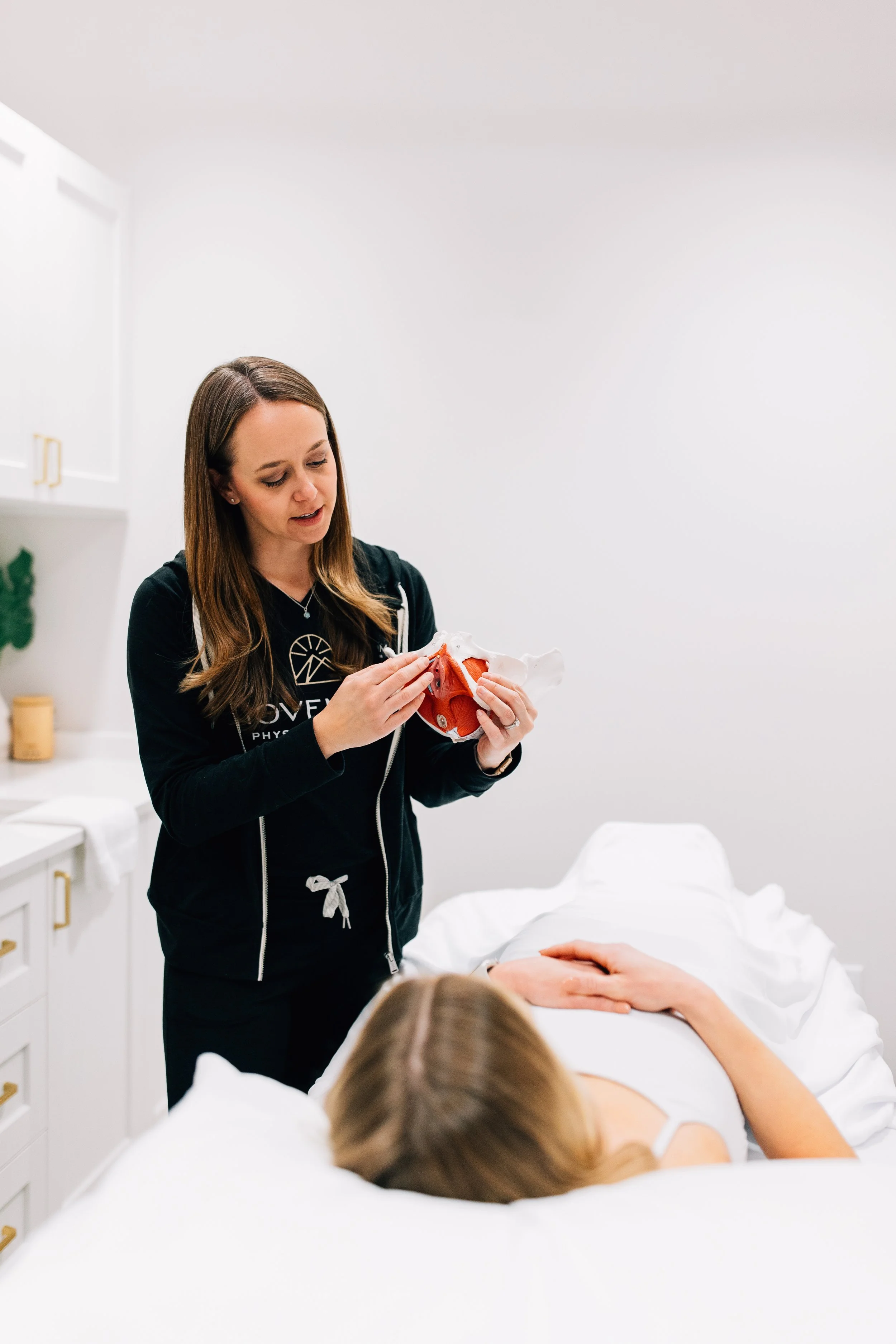
In pelvic floor therapy, we determine if the pelvic floor muscles are weak, tight, or a combo of both. When the pelvic floor muscles are weak, they don’t have the tension or ability to close off the opening where your pee comes out (urethra). Then, you would require a strengthening program to get them stronger so you no longer leak! However, most often we find areas of tightness or muscle tension that we need to release first. Think about your pelvic floor like a trampoline. It needs the perfect amount of tension to support your organs and close off the openings to hold in pee and poop. When your pelvic floor is under more tension or tight, a little extra pressure from a cough, sneeze, or laugh will cause leaking to occur.
So now you may ask yourself, how do I know if my pelvic floor is tight or weak? That’s when you need a specialized evaluation of your pelvic floor muscles and get you on the right program!
We have a proven Movement Physio and Wellness 3-Step Method to help get rid of your bladder or bowel leakage for good. The 3-Step Method works in three phases: Elongate, Elevate, and Empower.
ELONGATE.
We need to calm down the nervous system in order to reduce your pain and length tissues that are tight. We do this by incorporating breathwork and hands-on manual therapy techniques to get your muscles to relax. (Visits 1-4)
ELEVATE.
Once the tissues are calmed down and your pain is reduced, we will work on the brain to muscle connection and re-educate the muscles to fire the correct way. (Visits 5-8)
EMPOWER.
We work on functional strengthening of the muscles to help keep you strong and prevent this problem from returning again. We make sure you have all the “tools” in your “toolbox” so you feel empowered to take care of your body so you never experience this problem again! (Visits 9-12)
What our patients have to say..
I am only on my 3rd week with Movement Physio & Wellness but I have already noticed a big difference. Seriously, I have! The staff I’ve encountered have all been very friendly and helpful, Alexis is the specialist who’s helping me. She has been great to work with….super knowledgeable, thorough and very personable. If you have pelvic floor issues, I highly recommend you make contact with their office. You will be glad you did.
— CarolI am seeing Dr. Bri and can say that I'm already so excited to move forward with treatment. She is incredibly knowledgeable; after just the initial consultation I have already learned so much about my body and how to treat it better. I am positive that my treatment plan will lead to a stronger self (mentally and physically). Also, all of the staff who I have met are so sweet and helpful! I'm so thankful to have found this practice, with such a dedicated and thoughtful group of professionals. Thank you all so much for supporting me!
— TamaraMovement is a welcoming place with kind and informative staff! I instantly felt comfortable with Dr. Bri during my assessment and did not feel rushed or pressured during my appointment. I would highly recommend Movement Physio and Wellness if you are struggling with pelvic floor weakness.
— MelanieFrequently Asked Questions
-
Pelvic floor physical therapy is a speciality physical therapy that is perfect for people who are struggling with conditions related to the pelvis or pelvic floor. Some of these common issues have to do with bladder leakage, bowel issues, or sexual dysfunction related to the muscles of the pelvic floor. We work on eliminating pain, stopping these embarrassing symptoms, and getting you back to activities and goals specific to you.
-
At Movement Physio and Wellness, we help adults struggling with bladder, bowel, and sexual dysfunction. We most typically see women during pregnancy, postpartum, or menopause. We also treat men struggling with pelvic floor problems like pelvic pain, urinary urgency, and constipation. We do not treat pediatrics but will see teenagers on a case by case basis.
-
The people that come to see us for pelvic floor therapy are often dealing with an issue related to the muscles of the pelvic floor. Most often, people struggle with bladder leakage, pelvic pain, bowel issues, and pregnancy/postpartum recovery. You can take this short 10 question quiz HERE to see if you’d be a good candidate to come in for therapy!
-
Prior to your first visit, please fill out your intake form that is emailed to you via our Jane booking system. At your first visit, you can expect to be evaluated and treated in a private room by one of our female pelvic health therapists. We look at how the body moves, especially your hips, back, core, and anything that has to do with your specific pelvic condition. With your consent, the therapists may ask to perform an internal exam to check if the pelvic floor muscles are tight, weak, or painful. Then, we come up with an expert treatment plan in order to meet your specific goals.
-
We are an out-of-network provider, which allows us to provide the highest level of one-on-one care without insurance restrictions. This means longer treatment sessions, a personalized plan designed just for you, and faster results. Many of our patients use HSA/FSA funds or submit for reimbursement through their insurance. We'd be happy to guide you through that process.
-
As pelvic floor therapists, we believe that an important part of our exam process is a pelvic floor muscle exam done via the vaginal canal or rectum. This is one way we can truly feel if the muscles are tight, weak, or painful. Deciding to perform the internal exam is a decision made by YOU and your therapist! Obviously, if you are not ready to have this exam done yet, no worries! Your therapist will explain all the options to you. We always ask for ongoing, informed consent to evaluate your body!
-
In many cases, we are a patient’s second or third pelvic floor therapist they have seen. When someone hasn’t had luck with pelvic therapy in the past, first we want to understand their experience and how they responded to treatment. We also want to understand how invested they were in their own care. We use this information and take a different approach to make sure you are given a new and improved plan to tackle these annoying bladder and bowel issues. We love collaborating with past therapists and other medical providers to make sure YOU are at the center of your care.
-
If you find yourself having very frequent urges to urinate, most often what is going on is the nerves that control the bladder are “sensitive” to filling, especially if we are always using the restroom “just in case!” This issue is treated by changing your bladder habits and treating the pelvic floor muscles to make sure they can LENGTHEN and strengthen! Usually, the pelvic floor muscles are tight and put pressure on the bladder, since the bladder sits right above the pelvic floor! This is something we treat all the time in the clinic!
-
Absolutely! Our bodies are incredible and it is so rewarding to see our patients who have struggled with bladder leakage for so many years, finally see improvements with less volume and fewer instances of leaks. We like to say that it is never too late!
-
When someone has dealt with chronic constipation for years, often we see a pelvic floor that is overly tight, or has difficulty with coordinating muscle relaxation to allow a bowel movement to happen. We also love to assess the abdominal wall when someone has constipation. Often it is tight and grippy! And abdominal massage is a great way to encourage a bowel movement to happen. We also teach you how to massage your abdomen yourself.
-
We treat women all the time who never birthed children. The pelvic floor can be impacted in so many ways that do not involve childbirth. Some other ways the pelvic floor can develop problems are impact trauma like falls, emotional trauma, sexual trauma, high impact activity with sports, and over clenching or doing too many Kegels